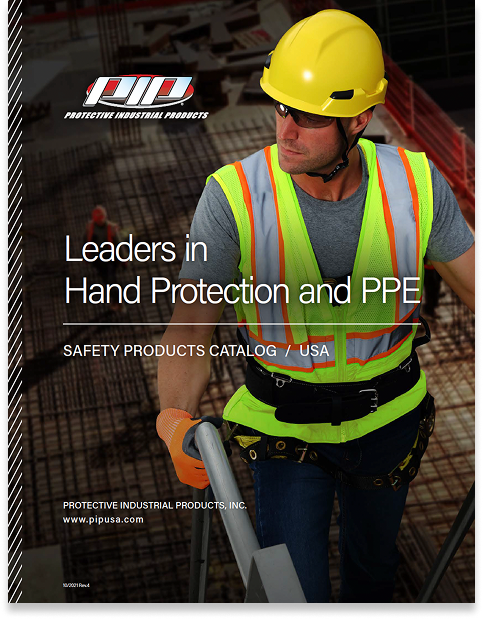
For safety managers and operations leaders, personal protective equipment is often viewed as a finalized checklist item: hazards identified, equipment issued, boxes checked. But one critical factor is frequently overlooked—whether that equipment actually fits the worker using it.
Proper PPE fit matters because equipment must function as designed to reduce risk and meet OSHA standards. If PPE does not fit correctly, it can compromise protection, productivity, and compliance.
When organizations focus only on issuing proper PPE without evaluating fit, they create a hidden operational blind spot. Ill-fitting gloves, eyewear, respirators, and fall protection systems may technically be present on the floor, but their effectiveness depends entirely on how they perform in real working conditions. Over time, poor fit becomes more than a comfort issue—it becomes a measurable safety and compliance concern.
How Does Poor PPE Fit Impact Workplace Productivity?
Poor PPE fit disrupts workflow, reduces dexterity, and forces workers to constantly adjust equipment, creating small inefficiencies that compound over time.
In many facilities, productivity losses tied to improper PPE go unnoticed because they happen in small increments. Workers wearing oversized gloves may struggle with fine motor tasks. Eye protection that shifts or fogs interrupts focus. Respirators that are too tight can cause fatigue, while loose respirators require repeated repositioning. Fall protection harnesses that restrict movement slow climbing, lifting, and positioning.
These “micro-adjustments” add up. If 10 employees each lose just three minutes per hour adjusting gloves or eyewear, that equates to half an hour of lost labor every hour across the team. Over a full shift, the cost becomes significant.
Beyond time loss, poor PPE fit can subtly change worker behavior. Employees may loosen straps, remove protection temporarily, or avoid wearing equipment consistently if it interferes with their ability to work efficiently. What begins as a fit issue can gradually turn into a compliance and safety issue.
When evaluating proper PPE programs, productivity should be part of the equation—not just hazard protection.
What Are OSHA Requirements for Proper PPE Fit?
OSHA requires employers to provide PPE that is appropriate for the hazard and properly fitted to each affected employee. Simply issuing equipment is not enough.
Under OSHA PPE requirements, employers are responsible for ensuring that protective equipment fits correctly and performs as intended. This includes selecting appropriate equipment for identified hazards and verifying that workers know how to wear and adjust it properly.
Respiratory protection introduces an additional layer of responsibility. OSHA mandates respirator fit testing for tight-fitting respirators to confirm that a proper seal is achieved. Without successful PPE fit testing, the respirator cannot be considered compliant—even if it has been distributed.
Compliance also means stocking multiple sizes where necessary. A one-size inventory approach does not meet regulatory expectations if it results in improper fit. Employers must also train workers on correct donning, adjustment, and inspection procedures.
There is an important distinction between providing PPE and providing properly fitted PPE. If equipment does not fit the worker, it may not meet OSHA standards—even though it appears to satisfy the requirement on paper.
How Does Improper PPE Fit Increase Workplace Injury Risk?
Improper PPE fit increases injury risk because protective equipment must maintain full coverage and structural integrity to reduce exposure to hazards. When fit is compromised, protection weakens.
Loose gloves can create entanglement hazards around rotating equipment. Oversized garments may snag on machinery or sharp edges. Eye protection that shifts during movement can expose the eyes to debris, dust, or chemical splashes. Respirators that fail to seal properly allow airborne contaminants to bypass filtration entirely.
In fall protection systems, incorrect adjustment can alter weight distribution and anchorage positioning, reducing the effectiveness of the system during a fall event. PPE is designed to function as part of a broader safety system, and fit is the connection point between the worker and that system.
When proper PPE fit is ignored, the protective barrier becomes inconsistent. The result can be increased near misses, recordable incidents, and lost-time injuries. Beyond physical harm, these events impact morale and signal weaknesses in safety oversight.
Effective PPE compliance requires ensuring that protection performs consistently under real-world conditions—not just under ideal circumstances.
What Are the Hidden Financial Costs of Poor PPE Fit?
The financial impact of improper PPE fit is often indirect, but it is measurable through lost productivity, injury costs, and compliance exposure.
Improper fit can lead to higher injury-related expenses, including medical treatment, workers’ compensation claims, and temporary staffing to cover absences. Even minor injuries can escalate costs quickly when multiplied across a workforce.
There are also operational costs. Reduced efficiency from repeated adjustments or restricted movement affects throughput. Equipment that is forced into service despite poor fit may wear out faster, increasing replacement frequency.
Insurance premiums can be influenced by injury trends, and OSHA citations tied to PPE compliance gaps may result in penalties. Additionally, employee dissatisfaction with poorly fitting equipment can contribute to disengagement or turnover—adding recruitment and training costs to the equation.
Because these expenses are distributed across multiple categories, they rarely appear as a single line item labeled “improper PPE.” However, over time, they accumulate into a significant financial burden.
Why Do One-Size-Fits-All PPE Programs Fail?
One-size-fits-all PPE programs fail because today’s workforce includes a wide range of hand sizes, face shapes, and body proportions that cannot be accommodated by limited sizing.
Many legacy PPE programs were built around minimal size options, assuming that most employees would adapt. However, as workforce diversity increases, variability in physical characteristics becomes more pronounced.
Modern manufacturers now offer expanded sizing ranges across gloves, protective clothing, eyewear, and respiratory protection. But availability alone does not solve the issue. Facilities must intentionally implement sizing strategies, ensure inventory access, and train supervisors to recognize improper fit.
Without deliberate planning, even well-stocked PPE programs can default to convenience rather than proper fit—undermining both safety and PPE compliance efforts.
How Should Facilities Evaluate PPE Fit in the Workplace?
Evaluating PPE fit requires direct observation, employee feedback, and verification of compliance processes such as fit testing and training.
One of the most effective steps is walking the floor and observing how workers actually wear their equipment. Are gloves slipping? Are employees adjusting eyewear frequently? Are respirator straps overtightened or loose?
Employee feedback is equally important. Workers can often identify comfort and functionality concerns that supervisors may not notice. Reviewing injury and near-miss data can also reveal patterns linked to improper PPE fit.
For respiratory programs, facilities should confirm that required PPE fit testing is current and properly documented. Inventory checks should ensure multiple sizes are available and easily accessible.
A structured but practical evaluation approach helps organizations move beyond assumption and confirm that proper PPE is not only issued—but truly functional.
How Rodeno Helps Facilities Improve PPE Fit and Compliance
Proper PPE fit directly influences productivity, regulatory compliance, injury prevention, and long-term operational costs. Yet many facilities discover fit gaps only after incidents or audits reveal weaknesses.
Rodeno supports organizations through complimentary site walk assessments designed to identify PPE fit, compliance, and performance gaps in real working environments. By evaluating how equipment functions on the floor—not just in inventory—facilities can strengthen protection, improve efficiency, and reinforce OSHA compliance standards.
If you would like to evaluate your PPE program, schedule a site walk with the Rodeno team to assess fit, compliance, and operational impact.